
Corporate Stationery Printing in Dubai: Letterheads, Envelopes, Notepads & Complete Office Sets
Introduction
Every business in Dubai sends the same silent signals, dozens of times a day: the letterhead on a quotation, the envelope a contract arrives in, the notepad on the meeting table, the folder handed over at a pitch. Long after the meeting ends, your stationery keeps speaking — about precision, about standards, about whether this is a company that sweats the details.
Corporate stationery printing in Dubai is the craft of making all of those touchpoints consistent and unmistakably yours. It is not just putting a logo on paper. It is choosing a paper stock with the right weight and texture, matching colors exactly across letterheads, envelopes, and folders printed weeks apart, and finishing with details — foil, embossing, edge coloring — that make a document feel considered before a single word is read.
In Dubai’s business culture, where first impressions carry unusual weight and printed documents still change hands in government offices, banks, law firms, and majlis meetings, stationery quality is noticed. A flimsy letterhead undermines a strong proposal; a crisp, well-finished set quietly supports it.
This guide covers the complete corporate stationery range printed in Dubai — letterheads, envelopes, business cards, notepads, custom notebooks, presentation folders, compliment slips, and hospitality items like menus and table cards — plus paper stocks, printing methods, finishing options, quantities, costs, and the ordering process.
What Do Corporate Stationery Printing Services Include?
A full corporate stationery printing service in Dubai typically covers:
- The complete item range — letterheads, envelopes, business cards, notepads, notebooks, folders, compliment slips, stamps, and seals
- Brand-consistent design — one visual system applied across every item, so colors, typography, and logo usage match everywhere
- Paper consultation — stock weight, texture, and finish matched to each item’s job (a letterhead and a presentation folder should not feel the same)
- Offset or digital printing — the right press for your quantity and quality target
- Finishing — foil stamping, embossing, die-cutting, lamination, edge painting, binding
- Numbering, perforation, and padding — for invoice books, receipt books, and notepads
- Kitted office sets — everything packed as complete sets for new offices, new branches, or rebrands
The Corporate Stationery Range, Item by Item
1. Letterheads
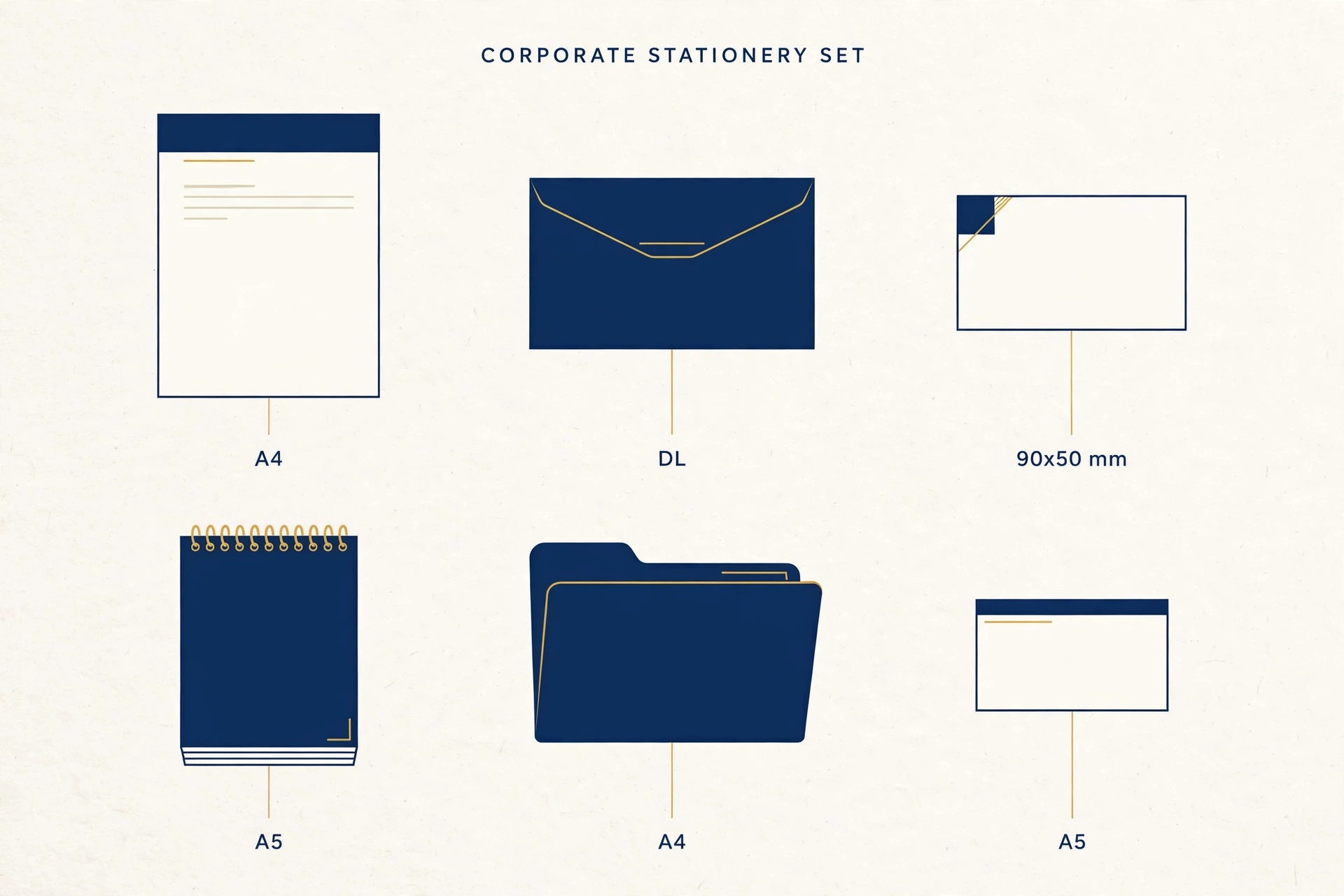
The foundation of business stationery. Standard A4 (210×297 mm), usually on 100–120 GSM uncoated or lightly textured stock that takes inkjet and laser overprinting cleanly — because most companies print the body text in-office on pre-printed letterheads. Design essentials: logo, full legal company name, address, phone, email, website, and trade license number where applicable in the UAE. Keep generous white space; a crowded letterhead fights with the letter printed on it.
2. Envelopes
The first thing a recipient touches. Standard business envelopes (DL 110×220 mm for A4 tri-folded, C4 229×324 mm for flat A4) printed with your logo, return address, and brand colors — or fully custom sizes for invitations and premium mailings. Key detail: envelope printing runs on different machinery than flat sheets; window vs non-window, gumming, and flap style all affect the quote.
3. Business Cards
The handshake of stationery. Standard 90×50 mm (or 85×55 mm), on 300–400 GSM art board with matte, gloss, or soft-touch lamination — the dedicated business card page will cover stocks and finishes in full. On this page: order them as part of the set so color and typography match the letterhead exactly.
4. Notepads
Glue-bound or spiral pads (commonly A5 or A4, 50–100 sheets) with your letterhead-style header on every sheet — for meeting notes, site notes, and internal memos. Printed on lighter uncoated stock (80–90 GSM) that takes pen ink well. Best for: offices, site teams, clinics, and showrooms.
5. Custom Notebooks
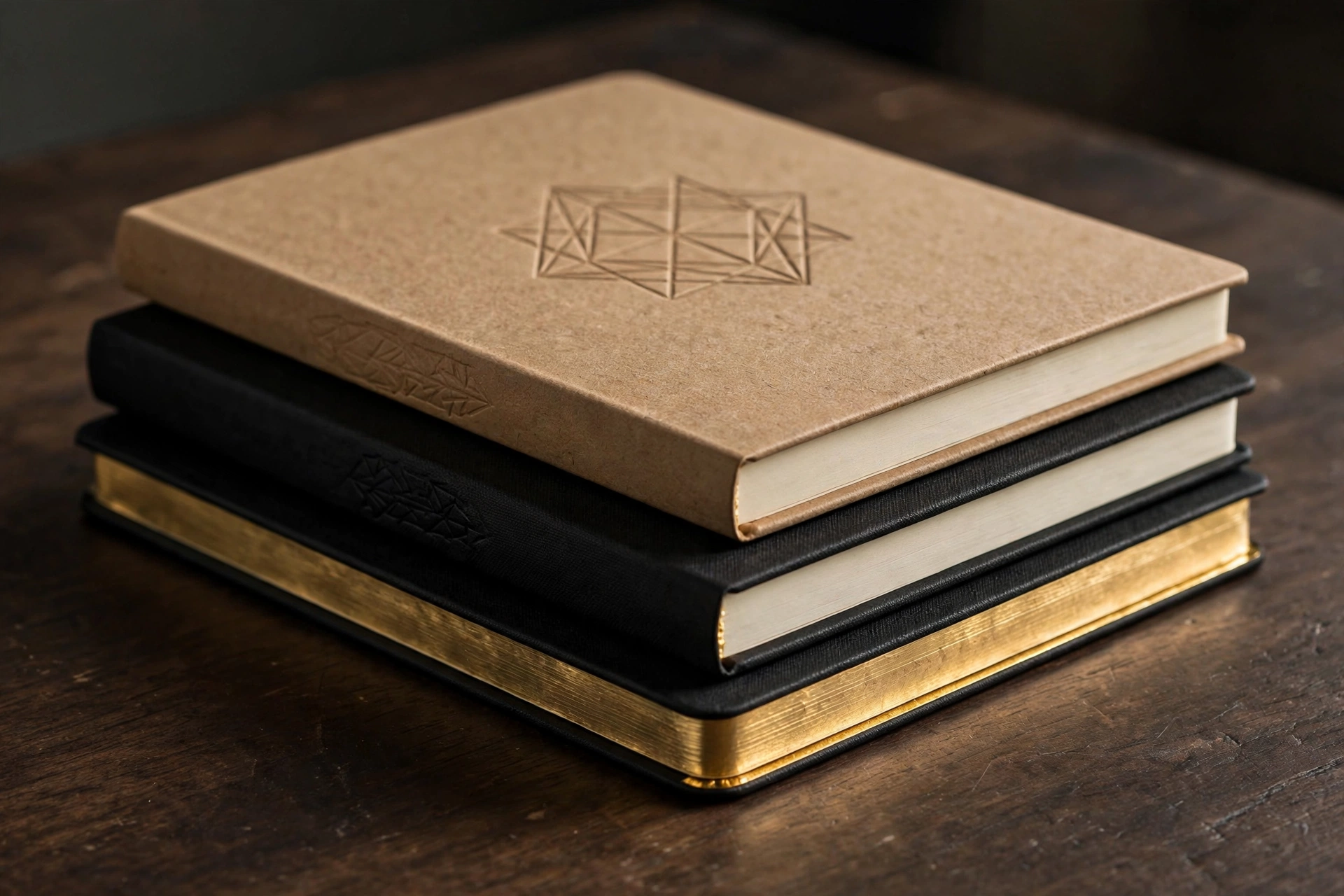
A step up from notepads: hardcover or softcover branded notebooks with your logo foil-stamped or debossed on the cover, custom endpapers, and optional ribbon markers. Very popular in Dubai as corporate gifts, onboarding kits, and conference giveaways. Best for: corporate gifting, events, staff onboarding, and premium brand merchandise.
6. Presentation Folders
A4 pocket folders (usually with one or two glued pockets, often with a business-card slit) that turn loose documents into a branded presentation. Printed on sturdy 300–350 GSM board, frequently with matte lamination and spot UV or foil on the cover. Best for: proposals, contracts, investor packs, and new-client welcome kits.
7. Compliment Slips
Half the size of a letterhead (commonly 210×99 mm), printed with a short “With compliments” message — the professional way to accompany documents, samples, and deliveries. Cheap to add to any stationery order, and widely used by Dubai trading companies and professional firms.
8. Invoice Books, Receipt Books & NCR Sets
Duplicate and triplicate carbonless (NCR) books, numbered and perforated, for businesses that still issue paper invoices and receipts — common in trading, workshops, logistics, and retail across the UAE. Available glued, stitched, or as loose sets.
9. Rubber Stamps & Company Seals
Self-inking stamps with your company name, logo, and license details — still a daily tool in UAE offices for stamping invoices, contracts, and official paperwork. Round company seals for certificates and formal documents.
10. Menus & Table Cards (Hospitality)
Restaurants, cafés, and hotels run on printed stationery too: laminated or encapsulated menus that survive daily handling, table cards and tent cards for promotions, and wine lists on premium textured stock. Designed to match the venue’s brand and reprinted seasonally.
Paper Stocks: The Feel Is the Message
Paper choice is where stationery quality is actually decided. The main variables:
- Weight (GSM) — letterheads 100–120 GSM; compliment slips 100–120 GSM; notepad interiors 80–90 GSM; business cards 300–400 GSM; folders 300–350 GSM. Heavier is not always better — a 160 GSM letterhead jams office printers.
- Coated vs uncoated — coated (art) papers give sharper color and a smooth finish; uncoated papers feel more premium and take handwriting and office overprinting better. Letterheads are usually uncoated; folders usually coated + laminated.
- Texture — laid, linen, and felt textures add a tactile premium feel, popular for law firms, consultants, and luxury brands.
- Color — bright white for maximum color pop; off-white/cream for traditional and legal-sector stationery.
The overprinting rule: anything you will print on in your own office printer (letterheads, compliment slips, invoice sets) must be uncoated or lightly coated — heavy gloss coatings reject laser/inkjet toner.
Printing Methods: Offset vs Digital
| Offset printing | Digital printing | |
|---|---|---|
| Best for | 500+ sheets, exact color matching | Short runs, fast turnaround, variable data |
| Color | Pantone spot colors possible — exact brand match | CMYK process — very good, not Pantone-exact |
| Cost behavior | Setup cost spread over volume — cheap per unit at scale | No setup cost — economical under ~500 units |
| Turnaround | Longer (plate-making, setup) | Same-day/next-day possible |
| Typical stationery | Letterheads, envelopes, folders in bulk | Urgent letterheads, small notepad runs, personalized items |
Practical guidance: a 5,000-piece letterhead run belongs on offset; 200 letterheads needed tomorrow belong on digital. A good stationery printer will route your job to the right press without you having to ask — but knowing the difference stops you overpaying for small runs or under-specifying large ones.
Finishing Options That Elevate Stationery
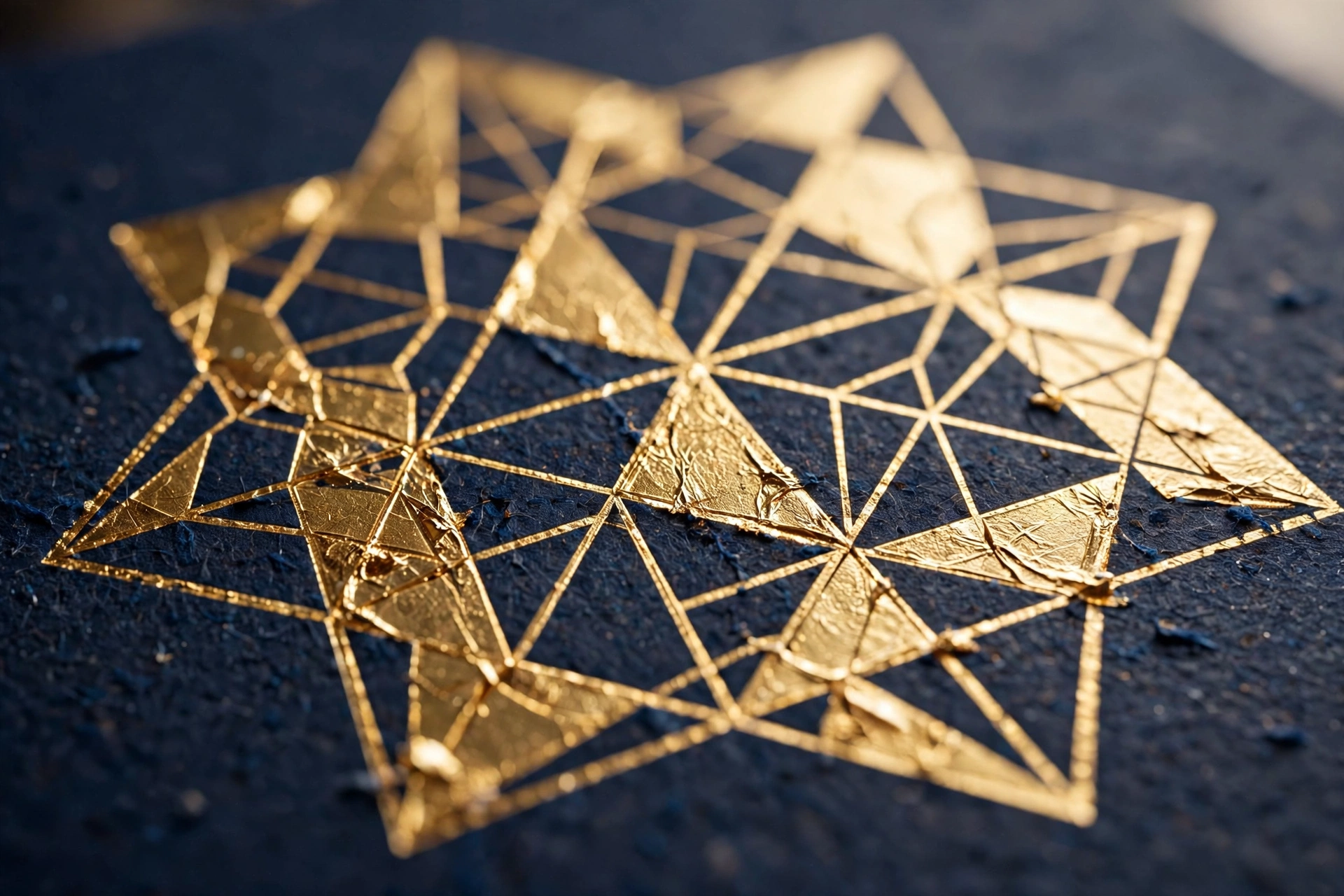
- Foil stamping — metallic (gold, silver, copper) or pigmented foil pressed into the paper; the classic premium signal on business cards, folders, and notebook covers.
- Embossing / debossing — raised or recessed relief of your logo, with or without ink. Felt before it is seen.
- Spot UV — gloss varnish on selected areas (usually the logo) over a matte background — subtle, modern, and very popular in Dubai corporate stationery.
- Lamination — matte (soft, fingerprint-resistant), gloss (vivid, high-shine), or soft-touch/velvet (luxurious tactile feel) protective film on cards and folders.
- Die-cutting — custom shapes for folders, tags, and cards that standard rectangles cannot achieve.
- Edge painting / gilding — colored edges on thick business cards and notebook covers — a small detail with outsized premium impact.
- Binding — spiral, wiro, or perfect binding for notebooks and multi-page documents.
- Numbering & perforation — for invoice/receipt books and ticket-style items.
Stationery Design Services
Consistency is the entire job. Professional stationery design in Dubai covers:
- One master visual system — logo, color palette (CMYK + Pantone references), typography, and layout grid defined once, applied to every item.
- Bilingual layouts — Arabic + English letterheads and envelopes with proper Arabic typesetting; getting the hierarchy right (which language leads) per your clientele.
- Legal-line completeness — UAE business documents commonly carry trade license numbers, TRN (tax registration number), and full registered addresses — your designer should prompt for these, not discover their absence at print time.
- Print-ready file preparation — 3 mm bleed, CMYK color mode, outlined fonts, correct dimensions for every item including envelope flap allowances.
- Template sets for office use — matching Word templates mirroring the printed letterhead, so in-office documents look like they belong to the same company.
Quantities: How Much to Order
| Item | Sensible starting quantity | Notes |
|---|---|---|
| Letterheads | 1,000–5,000 | Offset pricing improves sharply past 1,000 |
| Envelopes | 1,000+ | Match letterhead quantity roughly |
| Business cards | 500–1,000 per person | Reorder per hire, not per year |
| Notepads (A5) | 100–500 pads | Depends on staff count |
| Custom notebooks | 100–500 | Gifting runs; unit cost falls with volume |
| Presentation folders | 500–1,000 | Die-cutting setup favors 500+ |
| Compliment slips | 1,000–2,000 | Cheap to add alongside letterheads |
| Invoice/NCR books | 25–100 books | Numbered and perforated |
The rebrand rule: when rebranding, order the full set together — letterheads, envelopes, cards, slips — so every item comes off press in the same color run. Ordering piecemeal over months is how color drift happens.
Where Corporate Stationery Is Used Across Dubai
- Professional firms — law firms, auditors, and consultants where document presentation is part of the service
- Real estate brokerages — branded folders, letterheads, and compliment slips for every deal file
- Trading companies — invoice books, stamps, letterheads, and envelopes as daily operational stationery
- Clinics and healthcare — letterheads, prescription pads, envelopes, and appointment cards
- Hospitality — menus, table cards, guest folders, and stationery for hotel front offices
- Education — school letterheads, certificates, report folders, and branded notebooks
- Startups and new branches — complete kitted office sets for launches and new hires
How to Choose Your Stationery Specification
- List every item first. It is cheaper to print the set together than to discover missing items mid-order.
- Decide what gets overprinted in-office. Letterheads and compliment slips → uncoated stock, always.
- Pick one paper family. One white/uncoated stock across letterheads, slips, and notepad covers reads as one brand; mixed stocks read as an accident.
- Match quantity to press. Under ~500 → digital; 1,000+ → offset. Do not pay offset setup for 200 letterheads.
- Choose one premium finish, applied consistently. Foil on everything is noise; foil on the logo across cards, folders, and notebooks is a signature.
- Confirm bilingual requirements. Decide Arabic/English hierarchy before design starts, not during proofing.
- Proofread the legal lines. License numbers, TRN, addresses, phone numbers — errors here are expensive because the whole run is unusable.
Stationery Printing Mistakes to Avoid
- Gloss-coated letterheads — beautiful until your office printer smears toner across them. Uncoated for overprinting, no exceptions.
- Color drift across separate orders — letterheads printed in January, envelopes in June, and the blues no longer match. Order sets together or specify Pantone references.
- Missing legal details — discovering the TRN or license number requirement after 5,000 letterheads are printed.
- Wrong envelope size — A4 sheets do not tri-fold into every envelope; confirm the sheet-to-envelope fit before ordering.
- Tiny contact text — 6 pt footer text on a letterhead is unreadable when scanned or faxed; keep contact lines at 8 pt minimum.
- Foil on everything — restraint reads premium; excess reads gaudy.
- No digital templates — printed letterheads with no matching Word template means staff improvise, and the brand frays within weeks.
- Under-ordering to “save money” — reprinting 500 letterheads on digital costs more per unit than including them in the original offset run.
Corporate Stationery Cost Factors in Dubai
- Quantity — the dominant factor; offset unit costs fall steeply with volume.
- Paper stock — standard uncoated vs textured/premium vs specialty stocks.
- Number of items in the set — each item has its own setup; bundling saves.
- Print method — digital for short runs, offset for volume.
- Colors — CMYK vs Pantone spot colors (each spot color adds a plate/pass).
- Finishing — foil, embossing, lamination, die-cutting, edge painting each add cost.
- Binding and padding — for notebooks, notepads, and NCR books.
- Design work — full identity system vs print-ready files.
- Turnaround — standard vs urgent.
The Stationery Production Process: Step by Step
- Item list and quantities — you confirm every item, size, and quantity in the set.
- Paper and finish selection — stocks chosen per item, with overprinting requirements flagged.
- Design or artwork check — new brand system designed, or your files preflighted (bleed, CMYK, fonts, dimensions).
- Proof approval — digital proofs for every item; check legal lines, phone numbers, and Arabic text with fresh eyes. Nothing prints before sign-off.
- Printing — routed to offset or digital per quantity; color proofs or press checks for critical brand colors.
- Finishing — foil, embossing, lamination, die-cutting, numbering, perforation, binding, padding.
- Quality check and kitting — items checked, then packed as complete office sets where requested.
- Delivery — boxed by item, labeled, and delivered across Dubai and the UAE.
Why Print Stationery with a Local Dubai Company
- Same-ink color consistency — one local press run means your letterheads, envelopes, and folders genuinely match.
- Bilingual design as standard — proper Arabic typesetting, not an afterthought.
- UAE document know-how — license numbers, TRN placement, stamp and seal conventions handled routinely.
- Fast reorders — new hire needs cards, office runs low on letterheads; artwork on file means days, not weeks.
- Kitted delivery — complete office sets packed per branch or per department, delivered across the Emirates.
- One accountable supplier — design, print, and finishing under one roof instead of three vendors blaming each other.
Corporate Stationery Printing in Dubai — FAQs
1. What is included in corporate stationery printing?
Typically letterheads, envelopes, business cards, notepads, presentation folders, and compliment slips — with notebooks, invoice books, stamps, and seals available as add-ons. Most companies order a coordinated set so every item shares the same design, colors, and paper family.
2. What paper should letterheads be printed on?
100–120 GSM uncoated (or lightly textured) stock is the standard — it takes office laser and inkjet overprinting cleanly. Avoid gloss-coated letterheads; toner smears on them.
3. How many letterheads should I order?
1,000–5,000 is the sensible range for most companies — offset pricing improves sharply past 1,000 units. Under ~500, digital printing is usually more economical.
4. Can you match my exact brand colors?
On offset runs, yes — Pantone spot colors reproduce brand colors exactly. On digital runs, CMYK process color gets very close but is not Pantone-exact. For critical brand colors on large runs, specify spot colors.
5. Do you print Arabic and English stationery?
Bilingual stationery is standard in the UAE. Professional design includes proper Arabic typesetting with the correct language hierarchy for your clientele — confirm which language leads before design begins.
6. What is the difference between foil stamping and spot UV?
Foil stamping presses metallic or colored foil into the paper — a classic premium finish. Spot UV applies gloss varnish to selected areas over a matte background — subtler and more modern. Both are typically used on logos on cards, folders, and notebook covers.
7. Can I get custom notebooks with my company logo?
Yes — hardcover or softcover notebooks with foil-stamped or debossed logos, custom endpapers, and optional ribbon markers are a popular corporate gift and onboarding item in Dubai. Sensible runs start around 100–500 units.
8. Do you print restaurant menus and table cards?
Yes — laminated or encapsulated menus built to survive daily handling, plus tent cards and table cards for promotions, all designed to match the venue’s branding and reprinted seasonally.
9. What are NCR books, and do I need them?
NCR (carbonless) duplicate/triplicate books — invoice books and receipt books with numbering and perforation. If your business still issues paper invoices or receipts (common in trading, workshops, and logistics), you likely need them.
10. How long does stationery printing take?
Digital short runs can be same-day or next-day. Offset runs with finishing (foil, embossing, die-cutting) typically take several working days. Full multi-item sets with binding need the longest. Confirm against your deadline when ordering.
11. Should envelopes match my letterheads exactly?
Ideally yes — order them together so they print in the same color run. Envelopes printed months later on a different press can drift in color, especially in brand blues and greens.
12. What files do you need for stationery printing?
Vector logos (AI, EPS, PDF), brand color references (Pantone numbers if you have them), and the full text content including legal lines. If you have existing files, they will be preflighted for bleed, color mode, and fonts before printing.
Ready to Print Your Corporate Stationery in Dubai?
Start with the item list — everything your office touches in a week — and build one consistent set: one paper family, one color standard, one finish signature. Done right, your stationery stops being an expense and starts being an asset that works every time a document leaves your desk.
Looking for letterhead printing, envelope printing, custom notebooks, presentation folders, or complete office stationery sets in Dubai? Contact M I R Printing with your item list and quantities — and get a coordinated set, color-matched and finished to the standard your business deserves.